Doctoral Program in Materials Engineering Sciences

Applications open until September 27

About the program

The Doctoral Program in Materials Engineering Sciences is multidisciplinary, with research lines aligned with internationally recognized strategic areas of research and development (R&D).

Mission

Contribute to scientific and technological development by educating researchers with a strong social awareness who can communicate, value, and transfer knowledge. The program aims to train professionals who make an impact in academic and industrial settings, as well as in the dissemination and democratization of scientific knowledge.

Vision

Promote comprehensive education that integrates frontier research in materials science and engineering, strengthening scientific culture and its social impact. The program directs its research lines toward internationally recognized strategic R&D areas and actively promotes internationalization through research stays, participation by international faculty, and a strong global collaboration network.

Program background

Theoretical and computational study of advanced materials using simulations and dynamic models. The line seeks to design and optimize materials for scientific and technological applications.

Applications

Experimental research focused on developing and innovating materials for applications in energy, health, food, and nanotechnology.

Applications

What sets Universidad Central’s Doctoral Program in Materials Engineering Sciences apart?

```html

170 m² of research laboratories in the Faculty of Engineering and Architecture

  • Nonlinear Systems - 35 m²
  • Nanostructure Chemistry - 30 m²
  • Nanosynthesis - 25 m²
  • Scientific Computing Room - 14 m²
  • GUINA (Graphic-power Unit Integrated Numerical Analyzer) - 14 m²
  • Electrochemistry and Energy - 30 m²
  • Magneto-optics - 6 m²
  • AFM Microscope - 16 m²

165 m² of research laboratories in the Faculty of Medicine and Health Sciences

  • Optical Instruments - 35 m²
  • Meeting Room - 30 m²
  • Synthesis - 45 m²
  • Storage Rooms - 20 m²
  • Molecular Biology - 35 m²
```

Admission profile

Applicants must hold a bachelor’s degree from a program lasting at least four years or a master’s degree in Science, Engineering, Physics, Chemistry, Biology, Computing or Computer Science, Materials Science, or another related discipline. Applicants may also hold a professional engineering degree from a program lasting at least five years in Materials, Metallurgy, Mechanics, Mathematics, Physics, Chemistry, Biology, Nanotechnology, or another related field.

Criterion Weight
Academic record and thematic fit
30%
Motivation letter
10%
Letters of recommendation
10%
Grades and academic ranking
30%
Personal interview
20%
Total 100%

Graduate profile

Graduates of the Doctoral Program in Materials Engineering Sciences are researchers with advanced scientific and technological expertise, capable of independently generating original knowledge and specializing in materials science and engineering. They are prepared to conceive and conduct innovative, autonomous research and to address complex challenges of national and international relevance through an interdisciplinary approach.

Their education will enable them to

Design and conduct frontier scientific research projects in materials, aimed both at understanding fundamental aspects and at applying them in productive and technological contexts, in line with national and international needs.
Integrate experimental, theoretical, and/or computational approaches according to the disciplinary profile of their research line, in an academic environment that promotes interaction and complementarity among different fields of knowledge.
Effectively disseminate, communicate, and transfer research results through scientific publications, participation in specialized conferences, engagement with academic, industrial, and social networks, and collaboration in national and international institutional settings.

Career fields: Graduates will be qualified to work in higher education institutions, R&D centers, and/or productive and industrial sectors as project leaders, lecturers, consultants, or innovation managers, contributing to sustainable development and strengthening the country’s scientific and technological ecosystem.

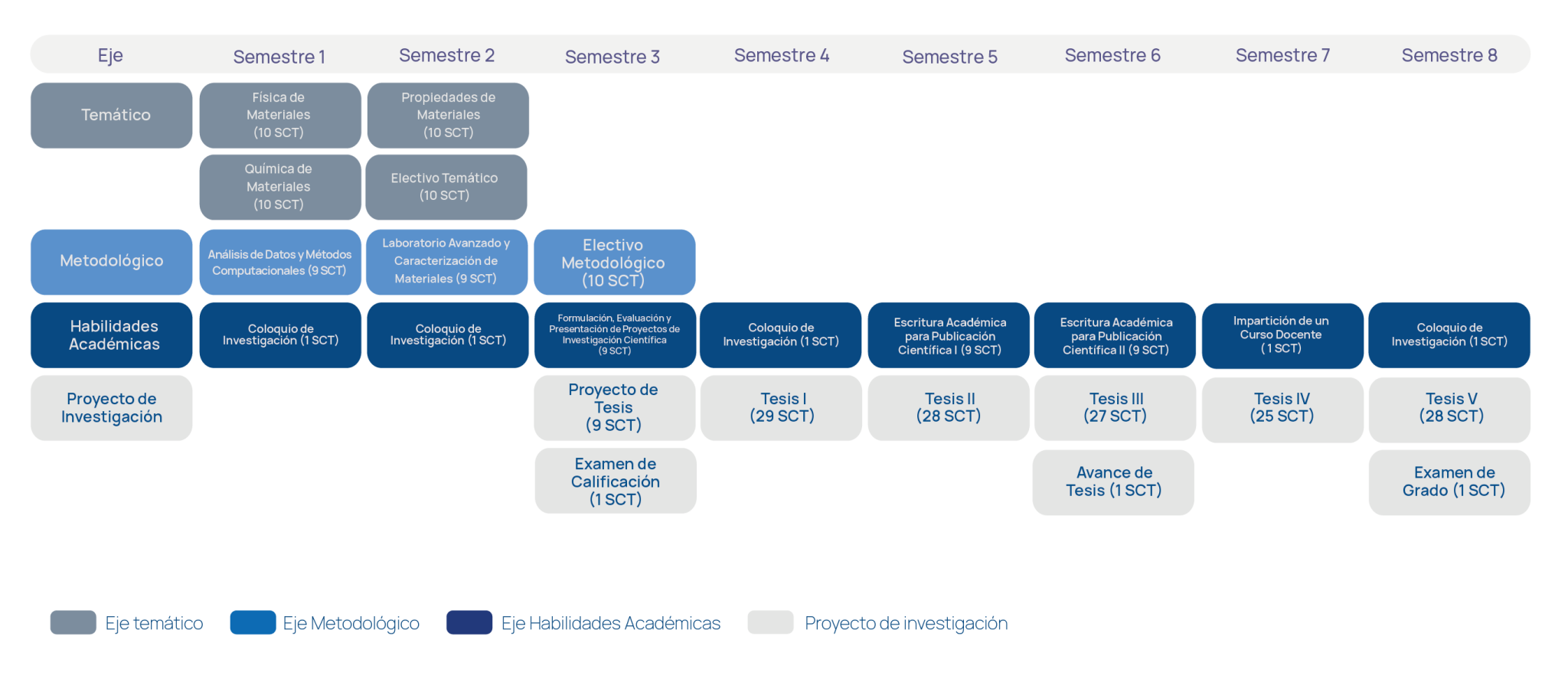
Curriculum

Academic staff

13 Core faculty
3 Collaborators
100% Faculty members holding doctoral degrees

Dr. Juan Luis Palma

  • PhD in Science, specialization in Physics
    USACH, 2012
  • Physical Engineer
    USACH, 2008
  • BSc in Applied Physics
    USACH, 2007
Academic profile

Dr. Juan Fuentealba

  • PhD in Science, specialization in Physics
    USACH, 2015
  • Physical Engineer
    USACH, 2009
  • BSc in Applied Physics
    USACH, 2007
Academic profile

Dr. Felipe Tejo

  • PhD in Science, specialization in Physics
    USACH, 2018
  • BEd in Physics and Mathematics
    USACH, 2013
Academic profile

Dr. Alejandro Riveros

  • PhD in Science, specialization in Physics
    USACH, 2015
  • BSc in Applied Physics
    USACH, 2008
Academic profile

Dr. Eugenio Vogel

  • PhD in Physics
    The Johns Hopkins University, 1975
  • MSc in Physics
    The Johns Hopkins University, 1972
  • BSc in Physics
    University of Concepción, 1968
Academic profile

Dr. Luis Álvarez

  • PhD in Molecular Physical Chemistry
    Universidad Andrés Bello, 2009
  • MSc in Physics
    Universidad Andrés Bello, 2001
  • Teacher of Mathematics and Physics
    Universidad Austral, 1985
Academic profile

Dr. Paulina Márquez

  • PhD in Chemistry
    USACH, 2018
  • Industrial Chemist and BSc in Chemistry
    UTEM, 2012
Academic profile

Dr. Marianela Saldías

  • PhD in Engineering Sciences, specialization in Materials Science
    University of Chile, 2013
  • Industrial Chemist and BSc in Chemistry
    UTEM, 2006
Academic profile

Dr. Ana María Méndez

  • PhD in Chemistry
    University of Chile, 2021
  • Chemist
    USACH, 2015
  • BSc in Chemistry
    USACH, 2014
Academic profile

Dr. Rafael Melo

  • PhD in Chemistry
    Federal University of Ceará, Brazil, 2016
  • MSc in Chemistry
    Federal University of Ceará, Brazil, 2012
  • BSc in Chemistry
    Federal University of Ceará, Brazil, 2010
Academic profile

Dr. Eduardo Sobarzo

  • PhD in Chemistry
    University of Chile, 2003
  • BSc in Science, specialization in Chemistry
    University of Chile, 1996
Academic profile

Dr. Marco Mellado

  • PhD in Chemistry
    UTFSM / University of Valparaíso, 2016
  • MSc in Chemistry
    UTFSM, 2012
  • BEd
    University of Playa Ancha, 2009
Academic profile

Dr. Manuel Duarte

  • PhD in Electrical Engineering
    University of Vale, 1988
  • MSc in Electrical Engineering
    University of Vale, 1986
  • Civil Electrical Engineer
    University of Chile, 1977
Academic profile

Dr. Daniela Brizuela

  • PhD in Technological Innovation in Building
    Polytechnic University of Madrid, 2021
  • Civil Engineer in Civil Works
    Universidad Central, 2010
Academic profile

Dr. Francisco Cruz

  • PhD in Computer Science
    Universität Hamburg, 2017
  • MSc in Computer Engineering
    USACH, 2006
  • BSc in Computer Engineering
    USACH, 2004
Academic profile

Dr. Christian Palavecino

  • PhD in Cellular and Molecular Biology
    Universidad Austral, 2010
  • MSc, specialization in Microbiology
    Universidad Austral, 2004
Academic profile

Core faculty productivity

312 Scopus-indexed publications
2021–2026
295 Scopus-indexed
publications
16 Academics
with research output

Doctoral students

Agustina Crucianelli

She holds a degree in Biology from the National University of Córdoba. Her career combines research in soil microbiology with the development of smart nanofilters for purifying industrial effluents, areas that led her to specialize in materials science and engineering.

Nicolás Troncoso

He holds a degree in Biochemistry from the University of Santiago de Chile and has been a student in the Doctoral Program in Materials Engineering Sciences since 2026. His scientific work has focused on electrocatalysis and bioelectrocatalysis, particularly the development and study of catalysts for energy applications.

Fabián Vega

He is a Physical Engineer from the University of Santiago de Chile and a student in the Doctoral Program in Materials Engineering Sciences. His work has focused on experimental materials research, particularly the synthesis and characterization of nanowires with magnetic properties.

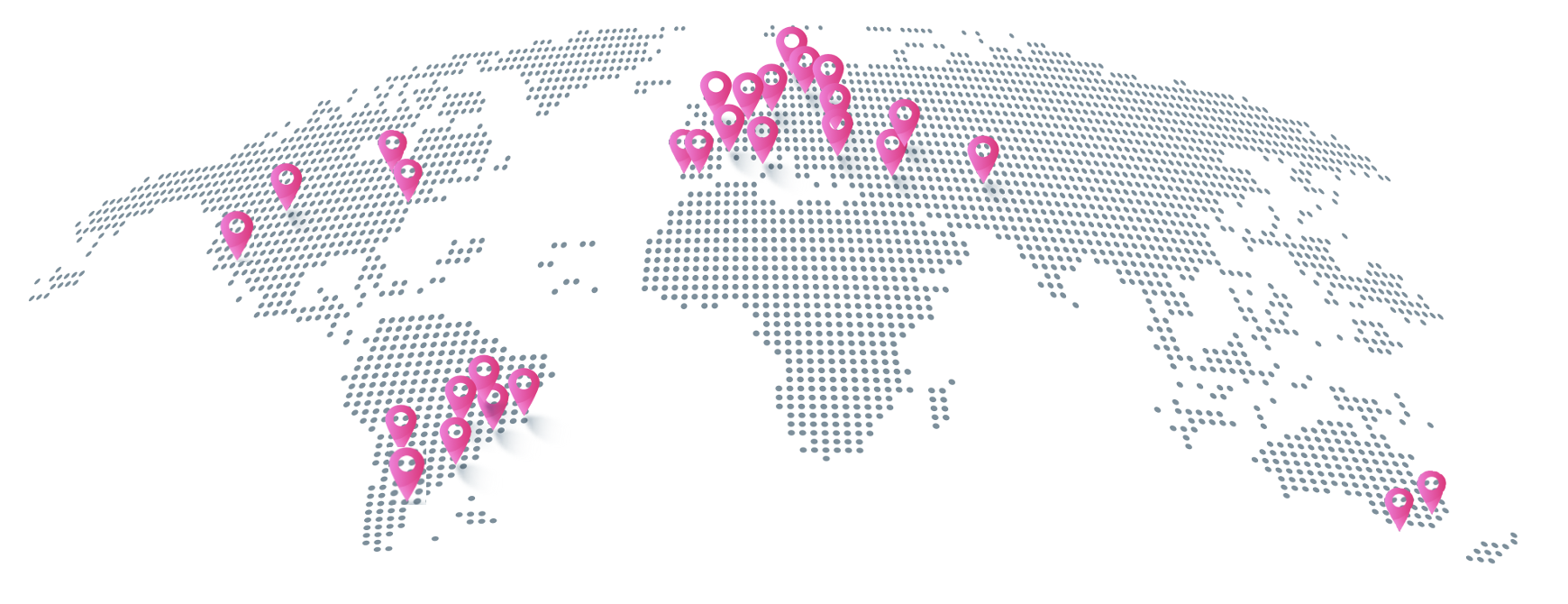
Internationalization and collaboration networks

DCIMat promotes internationalization through institutional agreements, academic networks, and scientific collaborations that strengthen doctoral education, joint research, and engagement with the scientific and technological community. In this context, core faculty members maintain active collaborations with institutions in several countries. These collaborations take the form of joint publications, research projects, academic stays, seminars, mobility opportunities and/or support for doctoral theses, and access to experimental and characterization capabilities.

Mapa de redes de colaboración internacional del Doctorado CIIMAT

Currently, the program has an active formal agreement with an institution in Italy and is in advanced stages of formalizing a collaboration agreement with an institution in Brazil. At the national level, the program maintains ties with universities, research centers, foundations, and companies, strengthening its connection to the country's scientific, technological, and productive ecosystem.

Applications

To begin your application, download the program’s official DCIMAT forms using the links provided below.

Then attach the following documents by email.